

This essay examines the ideological process through which political art objects undergo aestheticisation when displayed within museums and galleries. Drawing primarily upon the theoretical writings of Boris Groys, particularly his discussions of art activism and design, the essay analyses how activist objects are transformed through exhibitionary practices. The argument considers how processes of finalisation, display methodology, and institutional framing shape the interpretation of such objects by the beholder. As a central case study, the Victoria and Albert Museum’s exhibition Disobedient Objects (2014–2015) will be analysed to explore how objects originally embedded in political struggle are recontextualised within a museum setting. The discussion is further developed through reference to Michael Fried’s concept of “objecthood” (1967), alongside institutional aesthetic theory as articulated by George Dickie and critiqued by Robert McGregor. Together, these theoretical positions illuminate how political objects, once functional instruments of activism, become aestheticised artefacts within institutional frameworks.
Boris Groys (2014) argues that contemporary art increasingly adopts the role of activism, merging aesthetic practice with political intention. In On Art Activism, Groys suggests that modern political art operates within the tension between art and design. Design, he argues, aims to render objects appealing and consumable; it aestheticises to attract. By contrast, art traditionally operates through contemplation and critical distance. Groys contends that when political activism enters the art institution, it becomes aestheticised through processes akin to design. The activist object, once a tool of intervention, becomes subject to defunctionalisation. That is, it is stripped of its original practical function and reconstituted as an object for contemplation. In this transformation, the object is no longer primarily approached as an instrument of political agency but as an aesthetic artefact. Defunctionalisation is therefore central to understanding the aestheticisation of political objects. When relocated from protest sites into museums, placards, shields, banners, and improvised tools cease to function as instruments of resistance. Instead, they are rendered static, preserved, and framed within curated environments. Their seriousness may be retained narratively, yet their material agency is suspended.
The aestheticisation of political objects cannot be understood independently of the institutional structures that house them. Museums and galleries do not merely exhibit objects; they actively frame, contextualise, and hierarchise them. Display techniques—plinths, vitrines, wall height, lighting, and spatial arrangement—produce meaning. This phenomenon reflects what Adorno and Horkheimer (1944) describe as the “culture industry,” wherein cultural production becomes standardised and commodified. Within this framework, even dissenting or radical artefacts may be absorbed into systems of display that neutralise their disruptive potential. Commodification “liquidises” the value of creation, transforming political resistance into consumable cultural capital. A distinction may be drawn between two overlapping forms of politics:
The political narrative is embedded within the object.
The institutional politics of the museum or gallery.
When political artefacts enter museums, they become affiliated with institutional authority and brand identity. This association complicates their original intent. The museum does not simply preserve them; it authorises them.
The exhibition Disobedient Objects (V&A, 2014–2015) explored the material culture of activism from the late 1970s to the present (Victoria and Albert Museum, 2014a). Curated by Catherine Flood and Gavin Grindon, it presented objects used in social movements worldwide, including graffiti-spraying drones, improvised tear-gas masks, cardboard riot shields, and protest placards (Uncube Magazine, 2014). One example, We Won’t Give It to Putin a Third Time (2013), was a placard used during protests in Moscow opposing Vladimir Putin’s third presidential term (Victoria and Albert Museum, 2014b). Another placard, Coral Stoakes’ I Wish My Boyfriend Was as Dirty as Your Policies (2011), emerged from UK student protests against tuition fee increases (Interalia Magazine, 2014; Stoakes, 2014). Originally, these objects functioned as tools of mobilisation, confrontation, and visibility. Within the V&A, however, they were displayed within a curated, historically framed narrative. As Grindon and Flood (2014) note, museums have often been criticised as “mausoleums”—places where objects are preserved but stripped of their active life. In this context, activist artefacts risk becoming historical specimens rather than living instruments of dissent. The exhibition deliberately foregrounded the ingenuity of activist design, stating that political activism “drives a wealth of design ingenuity and collective creativity” (Victoria and Albert Museum, 2014). Yet this framing simultaneously aestheticised resistance, presenting it within the authoritative space of a national museum founded during British colonial expansion. Grindon and Flood (2014) themselves acknowledged the counterintuitive nature of situating activist objects within such an institution.
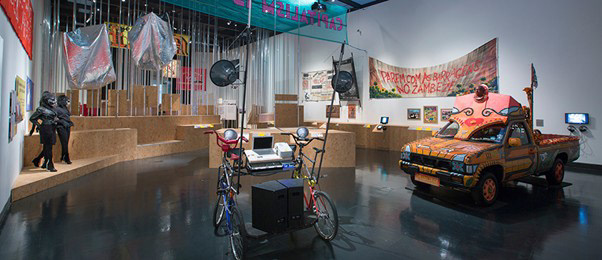
http://www.vam.ac.uk/content/exhibitions/disobedient-objects/index.html
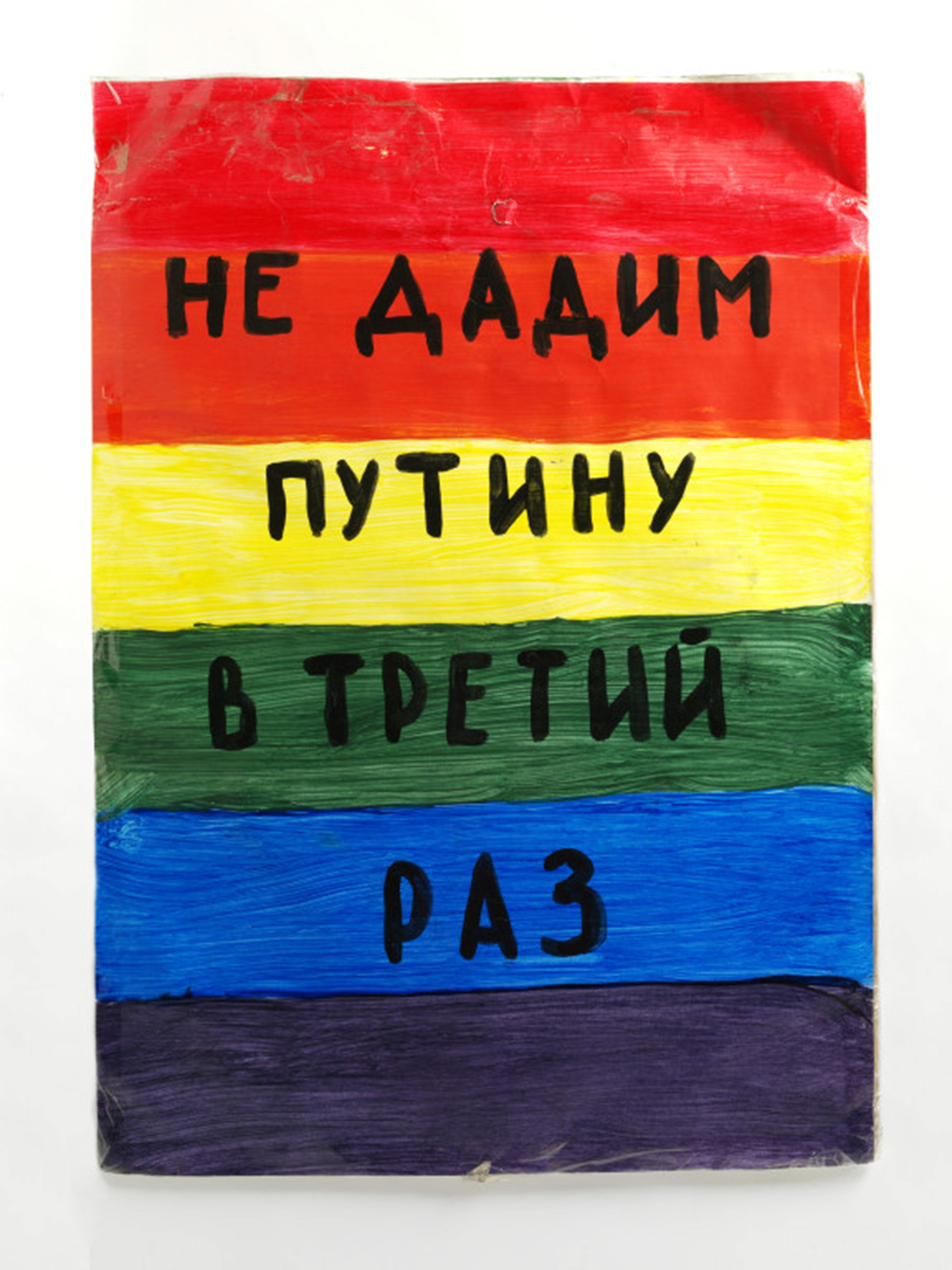
https://www.vam.ac.uk/blog/disobedient-objects/protest-and-pride-in-russia
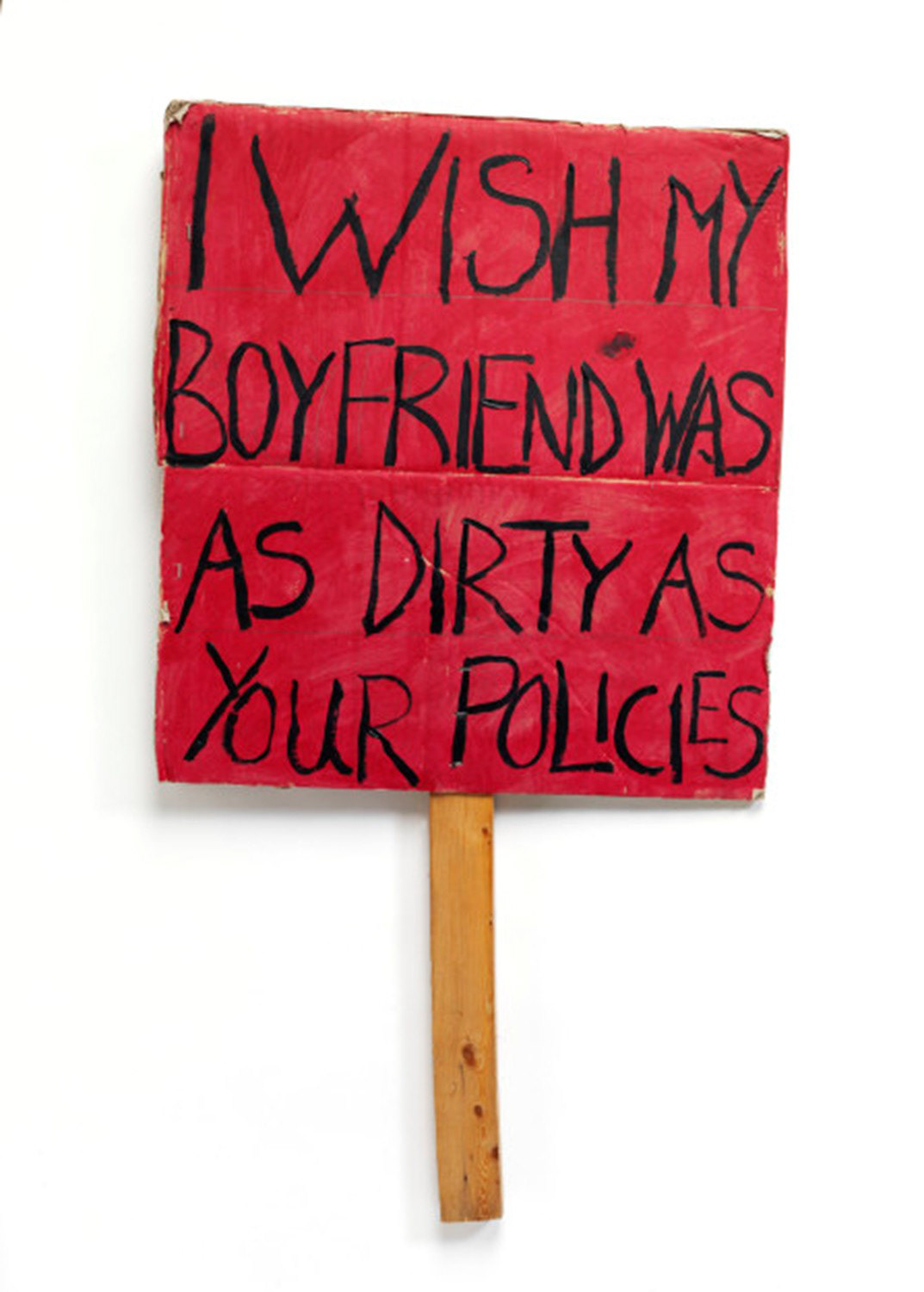
https://www.interaliamag.org/blog/disobedient-objects/
Michael Fried’s essay Art and Objecthood (1967) provides a useful framework for analysing this transformation. Fried criticised Minimalist sculpture for its “theatricality,” arguing that it depended upon the viewer’s presence and thus reduced art to objecthood. He contended that such works became anthropomorphic presences occupying shared space with the beholder. Applied to Disobedient Objects, Fried’s argument suggests that activist artefacts acquire new forms of presence when displayed institutionally. Their original functionality is replaced by a staged encounter. The exhibition becomes theatrical: the curator constructs a scene, and the viewer performs the role of witness. In this sense, both Fried and Groys acknowledge that objects assume altered ontological statuses when reframed. The activist placard is no longer a weapon of dissent but an aesthetic signifier within a curated narrative.
George Dickie’s (1974) institutional theory of art argues that artworks are defined by their placement within the “artworld.” Robert McGregor (1977), responding critically to Dickie, emphasised the theatrical analogy of exhibitionary space. Stage, lighting, and framing direct the audience’s attention, just as museum architecture guides perception. This analogy illuminates the transformation undergone by activist objects within the V&A. The museum setting acts as stage; the objects become performers within a controlled aesthetic drama. The audience’s shared understanding that they are engaged in a formal cultural activity shapes interpretation. Thus, institutional aestheticisation operates not merely through visual arrangement but through shared conventions of spectatorship.
This essay has examined how political art objects undergo aestheticisation through institutional display. Drawing upon Groys’ distinction between art and design, Fried’s concept of objecthood, and institutional aesthetic theory, it has demonstrated that activist objects become defunctionalised when relocated to museum contexts. The case study of Disobedient Objects illustrates how political artefacts, originally instruments of resistance, are transformed into contemplative exhibits. While institutional validation may extend visibility and legitimacy, it simultaneously risks neutralising political agency. Aestheticisation, therefore, is not merely visual enhancement; it is a structural transformation of function, authority, and meaning. The political object, once active and confrontational, becomes staged, preserved, and historicised—caught between resistance and representation.
References:
Adorno, T.W. and Horkheimer, M. (1944) Dialectic of Enlightenment. Amsterdam: Querido.
Dickie, G. (1974) Art and the Aesthetic: An Institutional Analysis. Ithaca: Cornell University Press.
Fried, M. (1967) ‘Art and Objecthood’, Artforum, 5(10), pp. 12–23.
Grindon, G. and Flood, C. (2014) ‘What are Disobedient Objects?’, Victoria and Albert Museum Blog. Available at: https://www.vam.ac.uk/blog/disobedient-objects/what-are-disobedient-objects (Accessed: 11 February 2026).
Groys, B. (2014) On Art Activism. London: e-flux / MIT Press.
Interalia Magazine (2014) ‘Disobedient Objects’. Available at: https://www.interaliamag.org/blog/disobedient-objects/ (Accessed: 11 February 2026).
McGregor, R. (1977) ‘Dickie’s Institutionalized Aesthetic’, Journal of Aesthetics and Art Criticism, 35(3), pp. 343–349.
Stoakes, C. (2014) ‘I Wish My Boyfriend Was as Dirty as Your Policies’, Save Our Placards Blog. Available at: http://saveourplacards.blogspot.com/2014/07/i-wish-my-boyfriend.html (Accessed: 11 February 2026).
Uncube Magazine (2014) ‘Disobedient Objects’. Available at: https://www.uncubemagazine.com/blog/13908637 (Accessed: 11 February 2026).
Victoria and Albert Museum (2014a) ‘Disobedient Objects: About the Exhibition’. Available at: https://www.vam.ac.uk/content/exhibitions/disobedient-objects/disobedient-objects-about-the-exhibition/ (Accessed: 11 February 2026).
Victoria and Albert Museum (2014b) ‘Protest and Pride in Russia’, Disobedient Objects Blog. Available at: https://www.vam.ac.uk/blog/disobedient-objects/protest-and-pride-in-russia (Accessed: 11 February 2026).